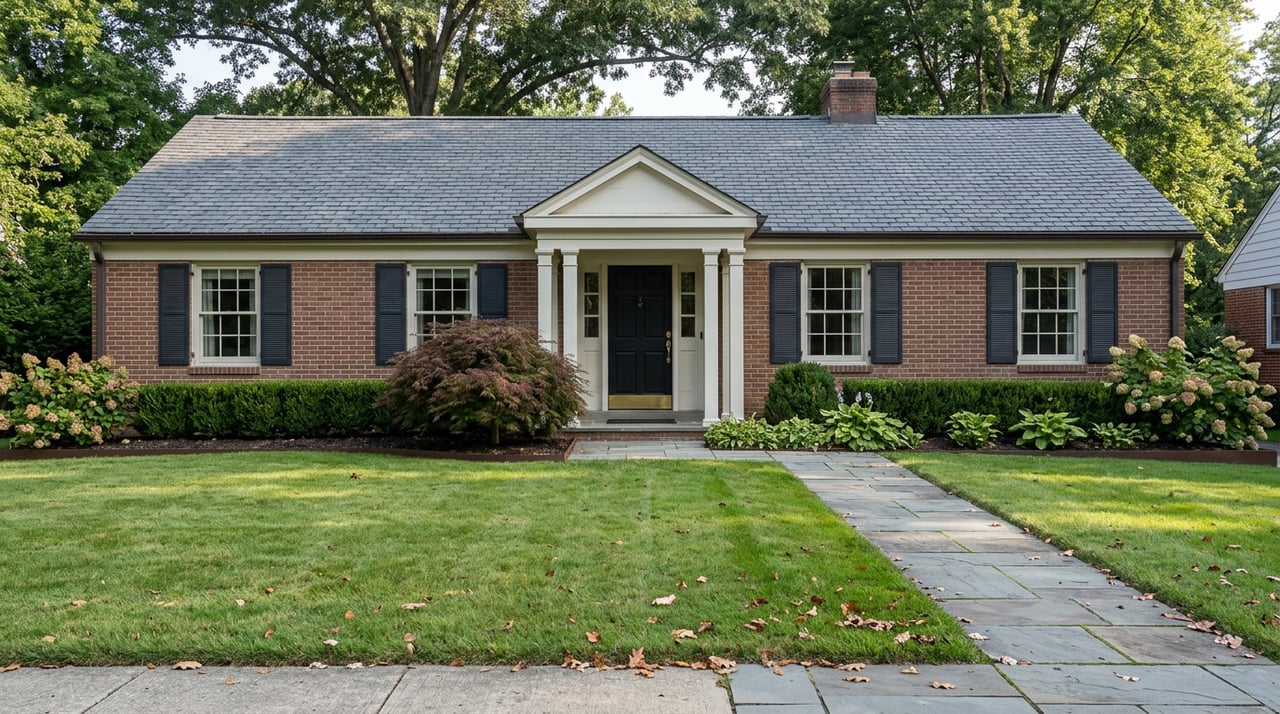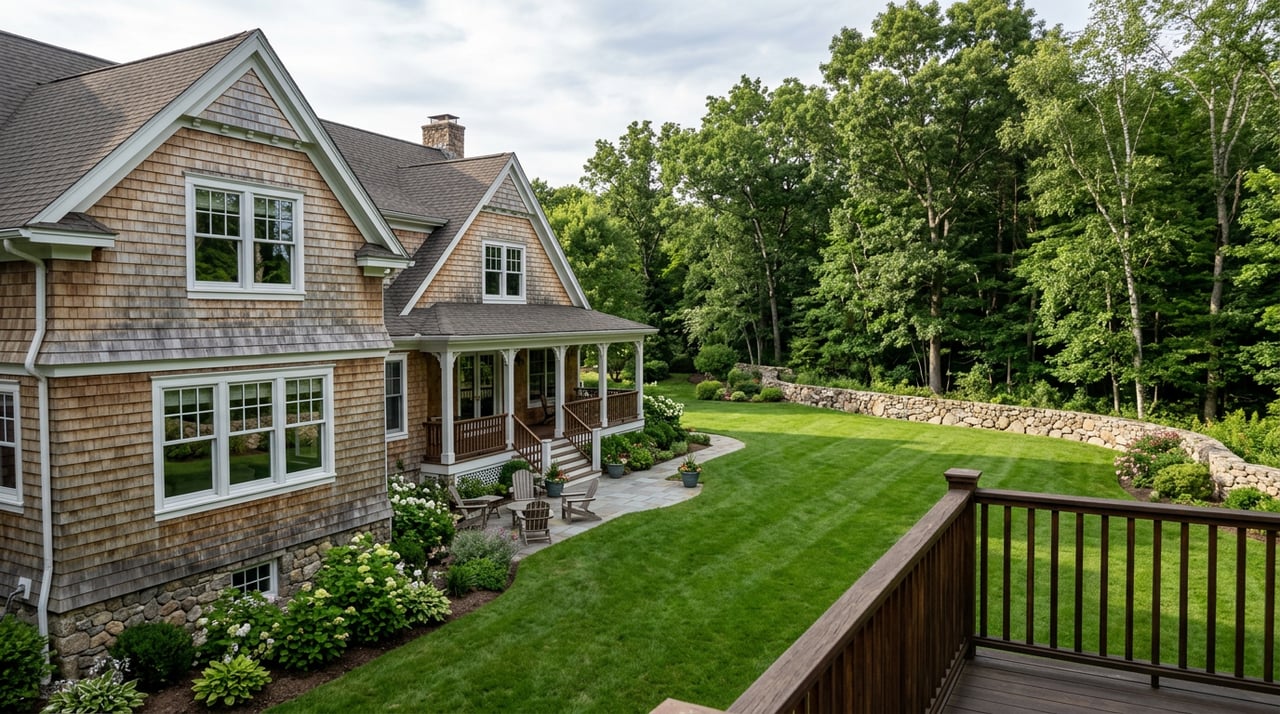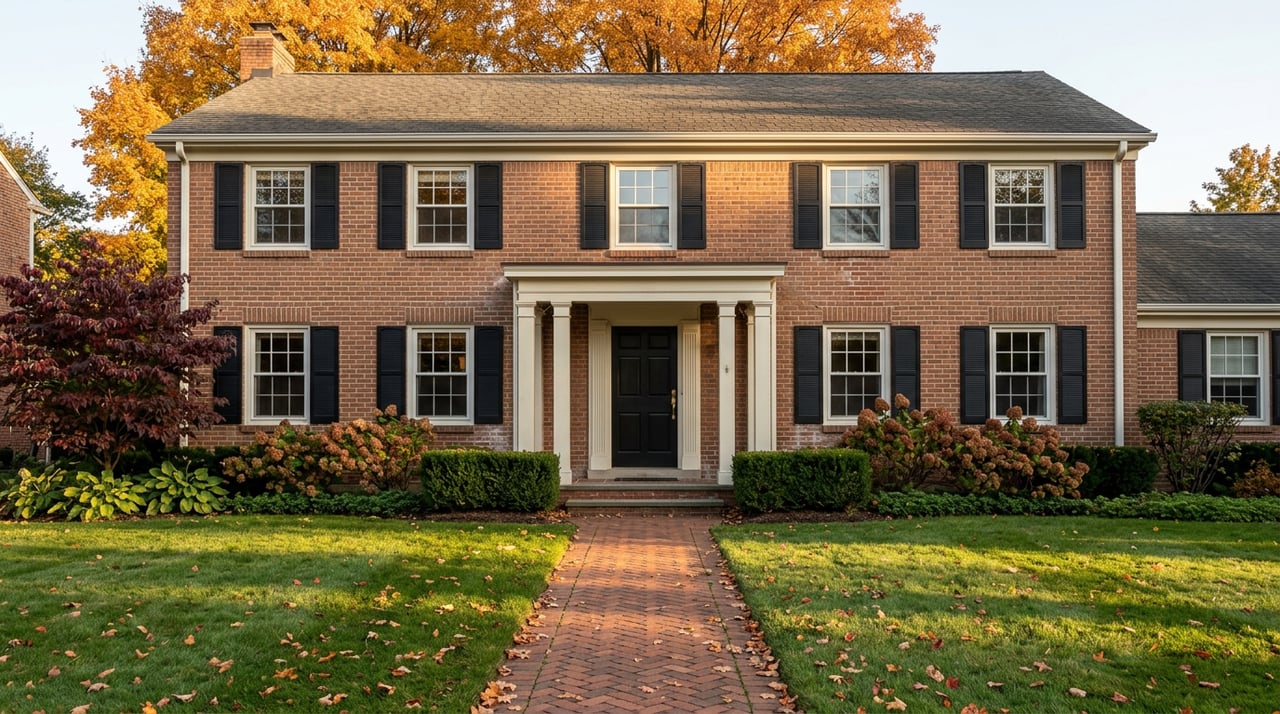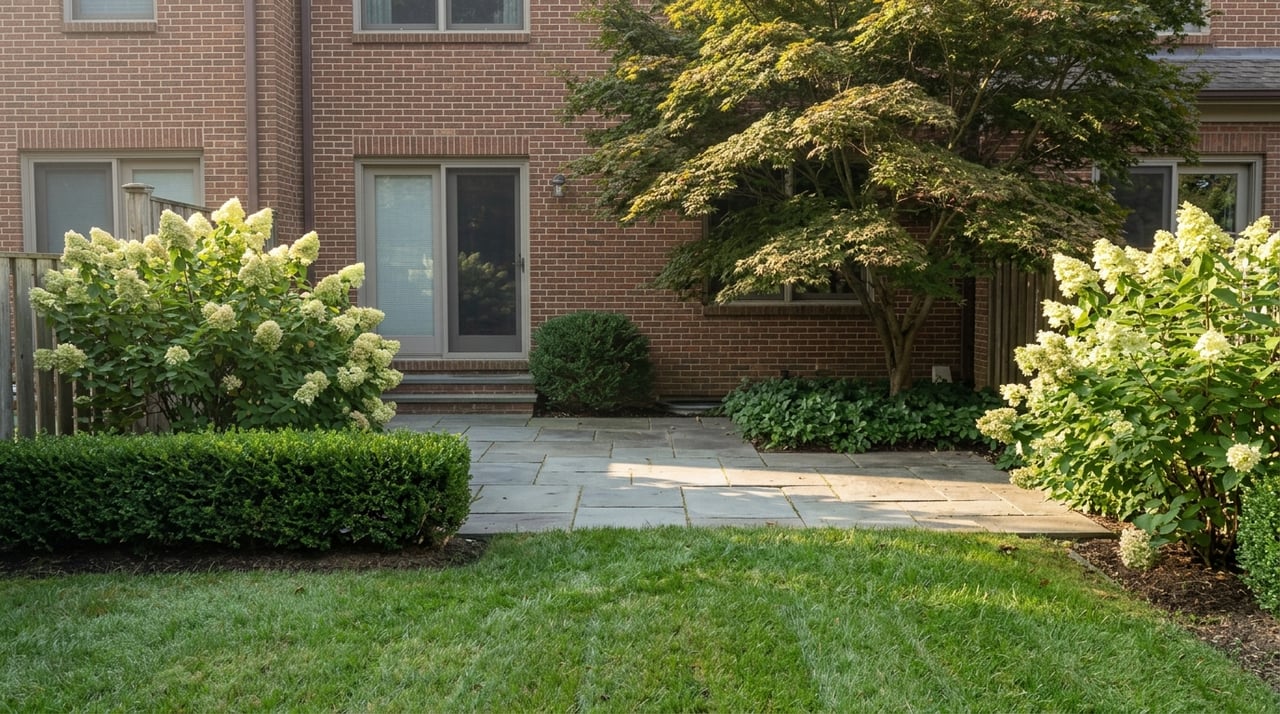
Scroll through listings in Bellefair long enough and you will eventually see two homes that make no sense next to each other. One prices like every other four-bedroom Colonial in the community, comfortably north of a million dollars. The other, similar size, similar street, comes in dramatically lower. Buyers assume a motivated seller or a hidden problem with the second one. Agents unfamiliar with Rye Brook sometimes assume the same thing.
Neither guess is right. Bellefair is not one market wearing 261 addresses. It is two markets, and the smaller one runs on a set of rules that has nothing to do with comparable sales.
What Bellefair Actually Is
Bellefair is a 261-home master-planned community in the Village of Rye Brook, built starting in 2000 and zoned within the Blind Brook School District, a small district with about 1,400 students and two Middle States-accredited Schools of Excellence. The HOA covers a genuine amenity package: indoor and outdoor pools, a fitness center, basketball courts, a playground, an on-site Bright Horizons child care center, a clubhouse with a fireplace and billiards room, a general store and café, and a meetinghouse where the community hosts organized events. Lawn care and snow removal are included. Homes average roughly 3,233 square feet, and recent market-rate listings in the community have run from the low $1.1 millions to just under $1.5 million.
That is the Bellefair most buyers picture. It is also the Bellefair that 249 of the 261 owners actually live in.
The Clause Buried in a 1998 Approval
The other 12 units exist because of a single condition attached to the project's original approval. Back in January 1998, when the Village of Rye Brook's Board of Trustees signed off on the planned unit development then called High Point Village, later renamed Bellefair, they attached Condition 16: a requirement that the developer set aside a portion of the units as affordable middle-income housing. The Village codified the details three years later in Chapter 6 of its municipal code, adopted in March 2001.
The stated purpose was not vague. The code says the goal is to help attract and retain qualified Village, school district, town, and emergency service organization personnel, and to encourage those residents to stay in the community once they arrive. In practice, that means Bellefair has spent a quarter century functioning as workforce housing for the people who run Rye Brook, tucked inside a community that otherwise looks and sells like any other upscale Westchester HOA.
A few facts define how the 12 units actually work:
- The initial sale price for each unit was capped at no more than $198,900, set in 2001 dollars.
- A buyer's total household income cannot exceed 115% of the Westchester County median income for a four-person household, a figure the U.S. Department of Housing and Urban Development publishes and updates.
- On the original sales, the developer covered at least half of each buyer's first-year HOA common charges to make the units more affordable still.
- The declaration of restrictive covenant recorded against each unit is written as a permanent provision, not a temporary one with a sunset date.
Why a 2001 Price Cap Still Matters Today
A $198,900 cap from 2001 sounds like ancient history next to a market-rate Bellefair Colonial listing near $1.5 million today. But the age of that number is the point, not a flaw in the story. The restriction was never designed to track the open market. It was designed to hold a small slice of a fast-appreciating community at a price a village employee or teacher could actually reach, and to keep it there through resale, not just at the initial closing.
That shows up clearly in how resales are structured. When an owner of one of the 12 units sells, the transaction doesn't run through an open MLS listing the way the other 249 homes do. It runs through the priority system the Village built into Chapter 6. The code even builds in a specific financial mechanism for sellers: a credit against the resale price of up to $7,500 for money the owner put into a special assessment covering exterior capital work like roof, gutter, siding, or window replacement. That detail alone tells you this isn't a market transaction with government paperwork attached. It's a government program that happens to use a house as the vehicle.
| The 249 Market-Rate Homes | The 12 Restricted Units | |
|---|---|---|
| Price basis | Comparable sales, current market | Capped by Village code, tied to affordability formula |
| Buyer eligibility | Anyone who can qualify for financing | Household income at or below 115% of county AMI |
| Priority | First offer, first close | Village, school district, town, and emergency services personnel prioritized first |
| Marketing | Standard MLS listing | Administered through the Village's restrictive covenant process |
| Resale credits | None specific to Village code | Up to $7,500 credit for exterior capital assessment payments |
Why This Catches People Off Guard
Nobody scrolling a real estate app sees a flag that says "restricted unit." The listing photos look the same. The floor plans might look the same. What's different lives in a recorded document most buyers never ask to see until an attorney pulls the title.
For a buyer, the risk is wasted time: falling for a price that looks like a steal, only to find out the household doesn't meet the income test or doesn't sit high enough in the priority order to get a shot at it. For a seller who happens to own one of the 12 units, the risk runs the other way. Listing it like a normal Bellefair home, expecting a market-rate close, misreads the entire process before it starts.
For anyone using Bellefair sales to gauge value elsewhere in the community, the risk is quieter but just as real. Pull the wrong sale into a comp set and the restricted unit will drag the number down for no market reason at all. The Village's own housing plan is explicit that these 12 homes are carved out specifically because their pricing formula has nothing to do with the surrounding market.
How Bellefair Compares to Rye Brook's Other HOA Communities
Rye Brook has several master-planned communities built around the same era, and none of the others carry this structure. Doral Greens, built in the mid-1990s next to the golf course, functions as a straightforward country-club-style townhouse community where HOA dues cover clubhouse, tennis, and pool access with no income-based carve-out. The Arbors offers a similar luxury townhouse setup, with paddle tennis, a sauna, and updated locker rooms, but again with a single, uniform buyer pool. Talcott Woods, a smaller enclave of 68 contemporary single-family homes, maintains its wooded lots and one outdoor pool under a conventional HOA with no municipal income restriction attached.
Bellefair is the outlier. It is the only one of Rye Brook's major HOA communities built with a legislated affordability requirement woven into its zoning approval, which is exactly why it deserves a closer look before anyone treats a Bellefair sale like every other Bellefair sale.
What to Ask Before You Fall for the Price
If a Bellefair listing looks unusually affordable, or if you are trying to value a home based on a recent Bellefair sale, a few questions save real time:
- Ask the listing agent directly whether the address is one of the 12 units under the Village's affordable middle-income program.
- Ask to see the declaration of restrictive covenant recorded against the property, not just the standard HOA disclosures.
- If you are the buyer, confirm your household income against the current HUD-published median for a four-person household in Westchester County before you get attached to a specific unit.
- If you are pulling comps, separate any restricted-unit sale from your market-rate data set entirely. The two pricing systems should never be blended.
A Few Straight Answers
Is it obvious from the listing which units are restricted? No. The restriction lives in recorded covenants and the Village's own records, not in the marketing photos or the standard listing description.
Can someone who doesn't work for the Village or schools ever buy one of the 12 units? Possibly, but only after higher-priority applicants, meaning Village, school district, town, and emergency services personnel, and then Village residents with at least a year of residency, have had their opportunity first.
Does the price restriction ever go away? The covenant is written as a permanent provision recorded against the property, not a restriction with a built-in expiration.
Bellefair is a genuinely good community, and most of what makes it desirable, the schools, the amenities, the location off King Street, applies to all 261 homes equally. But the pricing story only makes sense once you know that a small, deliberate piece of it was never meant to move with the market at all. If you're weighing a purchase in Bellefair, comparing it to Doral Greens or The Arbors, or trying to figure out what a past Bellefair sale actually tells you about current value, that's exactly the kind of local detail worth working through with someone who already knows where to look. Chris Tulotta has spent years inside Westchester's HOA communities and can walk you through what a specific Bellefair address is actually subject to before you write an offer. Let's Connect.